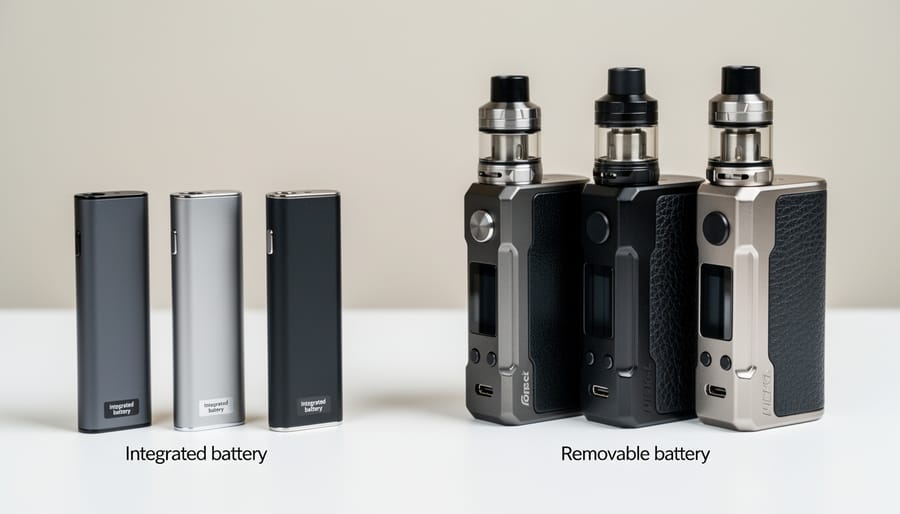
Vape batteries fall into two main categories: integrated (built-in) and removable, with removable batteries further divided by size and chemistry, most commonly 18650, 20700, 21700, and 26650 lithium-ion cells. Understanding these types matters because the wrong battery can damage your device, create safety risks, or simply leave you with poor performance and frequent recharging. Canadian vapers need to match battery capacity, discharge rate, and form factor to their specific device and usage habits, whether that’s casual all-day vaping or high-wattage cloud chasing.
Integrated batteries are sealed inside your device and charged via USB. They’re convenient and beginner-friendly but lose capacity over time and eventually require replacing the entire device. Removable batteries, by contrast, can be swapped out when depleted or degraded, offering flexibility and longer device lifespan. The numbers in battery names (18650, for example) refer to physical dimensions: 18mm diameter, 65mm length, with the final zero indicating cylindrical shape.
Choosing the right type depends on your vaping style, much like selecting the right energy source for any activity, from CBD and energy balance to powering high-performance mods. This guide breaks down each battery type, explains key specifications like mAh capacity and continuous discharge rating (CDR), and helps you identify which format suits your needs while keeping safety front and center in the Canadian market.
Understanding Vape Battery Basics
Vape batteries power the heating element that transforms e-liquid into vapor, making them the heart of every vaping device. Understanding how these batteries function helps you choose the right power source for your needs and use it safely.
At their core, vape batteries store electrical energy and release it on demand to heat your coil. When you press the fire button or inhale (on auto-draw devices), the battery sends current through the atomizer coil, which heats up and vaporizes the e-liquid. The battery’s characteristics, its capacity, voltage output, and discharge capability, directly affect how your device performs and how long it lasts between charges.
Several terms come up repeatedly when discussing vape batteries, and knowing what they mean makes choosing and using batteries much simpler:
- mAh (milliampere-hour)
- A measure of battery capacity that indicates how much energy the battery stores. Higher mAh means longer usage time between charges, a 3000mAh battery lasts roughly 50% longer than a 2000mAh battery under identical conditions.
- Voltage
- The electrical pressure that pushes current through your coil, typically ranging from 3.2V to 4.2V in a fully charged vape battery. Higher voltage produces more power and warmer vapor, though many modern devices regulate this automatically.
- Amperage (current)
- The flow of electricity from the battery to the coil, measured in amps. The amperage draw depends on your coil’s resistance and the wattage you vape at.
- Discharge rate (C rating or CDR)
- The maximum safe continuous current a battery can deliver without overheating or becoming dangerous. A 20A discharge rating means the battery can safely provide 20 amps continuously.
Battery type matters because different vaping styles demand different things from your power source. A casual vaper using a simple pod system at 12 watts can get by with a small integrated battery, while someone running dual coils at 80 watts needs high-capacity removable batteries with strong discharge ratings. Matching battery capacity to your vaping frequency is straightforward: higher wattage and longer sessions drain batteries faster, so frequent or power-hungry vapers benefit from larger capacity batteries or devices that accept multiple cells.
Think of it this way, a 1000mAh integrated battery might last an occasional vaper all day, but a heavy user vaping at high wattage could drain it in a few hours. Understanding these fundamentals helps you select batteries that actually support how you vape.
Integrated (Built-In) Batteries
How Integrated Batteries Work
Integrated batteries are permanently installed inside vaping devices during manufacturing, sealed within the device chassis alongside the control chip and wiring. You can’t remove them for replacement or swapping. This design allows manufacturers to optimize space and create sleeker, more compact devices since the battery compartment doesn’t need user access or additional safety mechanisms.
These batteries charge through a micro-USB, USB-C, or proprietary charging port built into the device. You simply connect the device to a power source using the included cable. Most integrated batteries in pod systems range from 300mAh to 1000mAh, while larger all-in-one devices may house 1500mAh to 3000mAh cells. Smaller capacities suit light vapers who can recharge daily, while higher capacities support moderate to heavy use throughout the day.
The battery management system inside monitors charging, preventing overcharging and regulating power delivery to the coil. LED indicators typically show battery level and charging status. This all-in-one approach eliminates the need to understand external battery specifications or carry spares, making integrated battery devices straightforward for users who value simplicity over customization.
Best Uses and User Types
Integrated battery devices are ideal for beginners who want a straightforward vaping experience without managing external batteries or chargers. New vapers can start immediately after unboxing, just charge via USB and vape, eliminating the learning curve associated with removable battery safety and maintenance. Casual users who vape infrequently also benefit since integrated batteries don’t require monitoring multiple cells or investing in external charging equipment.
Those prioritizing portability find integrated devices perfectly suited to on-the-go lifestyles. Pod systems and compact all-in-one mods slip easily into pockets without the bulk of spare batteries, making them convenient for commuting, travel, or discreet use. The simplified design also appeals to vapers transitioning from smoking who appreciate familiar, hassle-free operation.
Key advantages that make integrated batteries attractive include:
- Plug-and-play convenience with no battery installation or swapping
- Built-in safety protections that reduce user error risks
- Zero battery maintenance or compatibility concerns
- Sleek, compact device profiles for easy carrying
Canadian retailers often recommend integrated devices as starter options precisely because they remove technical barriers while delivering reliable performance for moderate vaping habits.
Limitations to Consider
Integrated batteries come with trade-offs you should understand before buying. The most significant limitation is fixed lifespan. After 300 to 500 charge cycles, the battery’s capacity degrades noticeably, meaning your device won’t hold a charge as long as when new. Unlike devices with removable batteries, you can’t simply pop in a fresh cell. Once the built-in battery wears out, you must replace the entire device or pay for professional battery replacement if available.
You’re also locked into the manufacturer’s chosen battery capacity. If you vape frequently or at higher wattages, a small integrated battery might leave you tethered to a charger multiple times daily. There’s no option to carry a spare charged battery for extended outings.
Charging flexibility is another consideration. You must charge through the device’s USB port, which typically takes longer than using an external battery charger. If the charging port fails, the device becomes unusable even if the battery still works.
For Canadian vapers who vape heavily or travel frequently, these limitations make integrated battery devices less practical than removable battery options. Consider your daily usage patterns carefully before committing to a device you can’t easily upgrade or repair.
Removable Battery Types
18650 Batteries
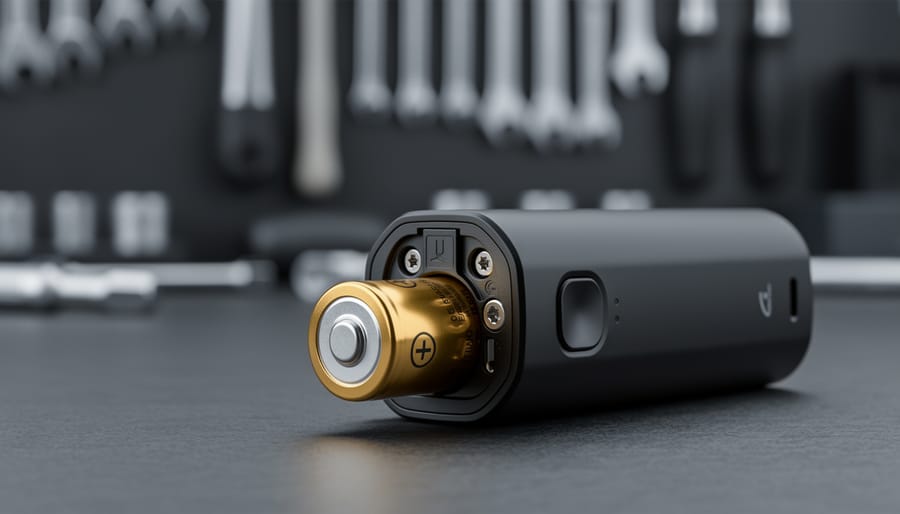
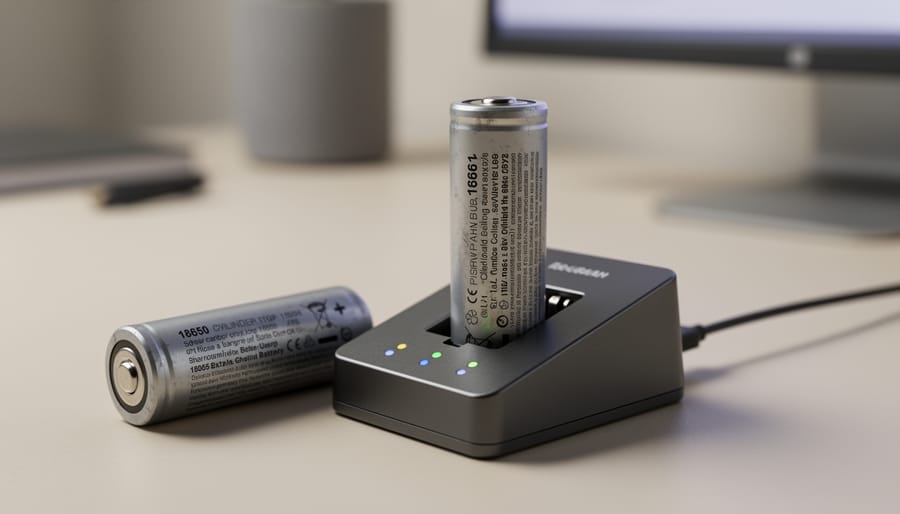
The 18650 battery is the workhorse of removable vape batteries, named for its dimensions: 18mm diameter and 65mm length. These cylindrical powerhouses dominate the vaping market because they strike an excellent balance between capacity, power output, and physical size that fits most box mods and regulated devices.
You’ll find 18650 battery capacity range typically spanning 2000mAh to 3500mAh, with higher-capacity cells providing longer use between charges. However, capacity isn’t the only specification that matters. The continuous discharge rating (measured in amperes) determines how much power the battery can safely deliver, crucial for vapers who use higher wattages or sub-ohm setups. A 20A discharge rating suits most regulated devices, while mechanical mod users need batteries rated for 25A or higher.
Most dual-battery and single-battery regulated mods are designed around the 18650 format, making these cells incredibly versatile. Safety considerations are paramount: never use batteries with damaged wraps, avoid carrying loose cells in pockets or bags (use protective cases), and replace batteries showing signs of wear like dents, tears, or excessive heat during use. Proper care ensures these reliable power sources serve you safely for hundreds of charge cycles.
20700 and 21700 Batteries
Larger-format 20700 and 21700 batteries represent an upgrade path from the standard 18650, offering more capacity and power in a slightly bigger package. The numbers work the same way: 20700 cells measure 20mm in diameter and 70mm tall, while 21700s are 21mm wide and 70mm long. That extra millimetre or two might not sound like much, but it allows for capacities ranging from 4000mAh up to 5000mAh, sometimes nearly double what you’d get from a typical 18650.
These batteries have gained traction among experienced vapers who run high-wattage mods or chain-vape throughout the day. A single 21700 can deliver the runtime that previously required dual 18650s, which means you can run a powerful single-battery mod without constant recharging. The higher capacity also translates to better current delivery in many models, supporting demanding builds without stressing the cell.
Not all devices accept these larger formats. Check your mod’s battery compartment specifications before buying, some tubes and box mods are 18650-only. Authentic 20700 and 21700 cells from manufacturers like Samsung, Molicel, and Sony cost more than 18650s, but Canadian retailers stock them for vapers who prioritize performance and endurance. If your device fits them, the upgrade often pays off in convenience and consistent power delivery.
18350 and Other Compact Batteries
The 18350 battery represents the smaller end of removable battery formats, measuring just 18mm in diameter and 35mm in length. These compact cells typically offer capacities between 700-1200mAh, significantly less than their larger cousins, but they enable remarkably portable mod designs that can easily fit in a pocket or small bag.
You’ll find 18350 batteries paired with mechanical mods and compact variable wattage devices designed for lower power output. They work best for mouth-to-lung vaping or restricted direct-lung styles where you’re not pushing high wattage. A 1000mAh 18350 might give you a few hours of moderate use before needing a recharge, making them suitable for short trips or as a backup option.
Some vapers keep 18350s on hand to transform their standard mod into a stealthier configuration for occasions when discretion matters. The trade-off is clear: you gain portability but sacrifice battery life and power capability. Other compact formats like 18500 batteries offer a middle ground with slightly more capacity, though they’re less common in Canadian retail.
If you value ultra-compact carry over all-day battery life and you vape at lower wattages, an 18350-compatible mod gives you flexibility that integrated battery devices can’t match.
Dual vs. Single Battery Configurations
When you’re choosing a vape mod, one of the biggest decisions is whether to go with a single-battery or dual-battery setup. This choice directly impacts how your device performs and how often you’ll need to recharge or swap batteries.
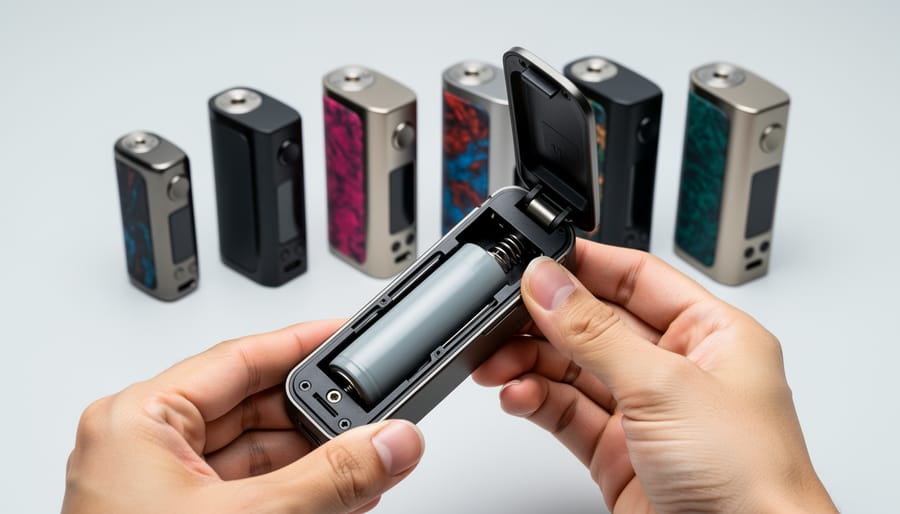
Single-battery mods are compact and lightweight, making them ideal for portability. They typically house one 18650, 20700, or 21700 battery and work well for moderate wattage vaping (under 75 watts). The trade-off is battery life, if you’re a frequent vaper or run higher wattages, you’ll find yourself changing batteries or recharging more often throughout the day.
Dual-battery configurations use two identical cells wired in series or parallel, depending on the mod’s design. The immediate benefit is extended battery life, often doubling your vaping time between charges. These setups also support higher power output, making them essential for sub-ohm vaping above 80 watts or for cloud-chasing builds. The downside is added weight and bulk, which some users find less convenient for everyday carry.
If you vape at lower wattages (30-50W) and value portability, a single-battery mod handles most needs. For high-wattage vaping or all-day heavy use without recharging, dual-battery devices deliver the power and endurance you need. Consider how you vape and how much device size matters to your daily routine.
Battery Chemistry and Technology
Nearly all modern vape devices use lithium-ion (Li-ion) batteries, the same technology powering smartphones and laptops. These rechargeable cells store energy through chemical reactions between lithium compounds and other materials. When you fire your device, lithium ions move through the battery to release power; when charging, they move back to restore capacity.
The chemistry matters because it determines three things vapers care about: how much power the battery delivers, how long it lasts, and how safely it operates. Li-ion batteries pack significant energy into a small space, which makes them ideal for vaping but also means they require proper handling.
Two main factors affect how a battery performs in your device. The first is capacity, measured in milliampere-hours (mAh). A 3000mAh battery holds more charge than a 2000mAh one, giving you more vaping time between charges. The second is the continuous discharge rating (CDR), often printed as an amperage number on the battery wrap. This tells you how much current the battery can safely deliver. High-wattage devices need batteries with higher CDR ratings to avoid overheating or damage.
Battery chemistry also explains why these cells degrade over time. Each charge cycle causes small changes in the internal structure. After 300 to 500 full charge cycles, you’ll notice reduced capacity and shorter battery life. This gradual decline is normal, not a defect.
Understanding these basics helps you recognize when a battery needs replacement and why following manufacturer specifications matters. Canadian retailers typically stock batteries with chemistry appropriate for vaping, but knowing what those specs mean lets you make informed choices for your specific device and usage pattern.
Matching Battery Type to Your Vaping Style
Your vaping style directly influences which battery type will serve you best. A mismatch between your habits and your power source leads to frustration, either constantly recharging, carrying backup batteries, or dealing with a device that’s bulkier than necessary.
Start by honestly assessing how you vape. Do you take occasional puffs throughout the day, or are you a frequent user who goes through multiple milliliters of e-liquid daily? Your usage pattern determines the capacity you need. Light vapers can thrive with integrated batteries in the 1000-1500mAh range, while heavy users benefit from high-capacity removable batteries or devices that hold multiple cells.
Your preferred wattage matters just as much. Mouth-to-lung vapers using 10-15 watts can rely on smaller integrated batteries that last all day. Direct-lung vapers pushing 50-100 watts need substantial power reserves, typically 18650 batteries rated for high discharge or dual-battery configurations that distribute the load.
| Vaping Style | Recommended Battery Type | Typical Capacity Needs | Key Considerations |
|---|---|---|---|
| Beginner / Portable | Integrated battery | 1000-1500mAh | Convenience, USB charging, no maintenance |
| Moderate Daily Use | Single 18650 or 21700 | 2500-4000mAh | Spare battery option, balanced size and capacity |
| High-Power / Cloud Chasing | Dual 18650 or 21700 | 5000mAh+ combined | High discharge rating, multiple spare sets |
Portability needs also shape your choice. If you want a device that disappears in your pocket, integrated batteries in slim pod systems make sense. Users who don’t mind a bit of bulk appreciate removable batteries, you can swap in a fresh cell instantly rather than waiting for a charge.
Consider your charging habits too. Integrated batteries demand access to USB ports throughout the day. Removable batteries offer flexibility: charge spares in an external charger while using your device, or carry backup cells for extended outings where charging isn’t practical.
Device compatibility narrows your options. Check your mod’s specifications before shopping. Some advanced devices require batteries with minimum discharge ratings, using cells below that threshold risks poor performance or safety issues. Match the battery to what your specific device demands, not just what sounds powerful.
Battery Safety and Best Practices
Battery safety isn’t optional when it comes to vaping, it’s fundamental to protecting yourself and getting the most from your device. Lithium-ion batteries are powerful energy sources that demand respect and proper care.
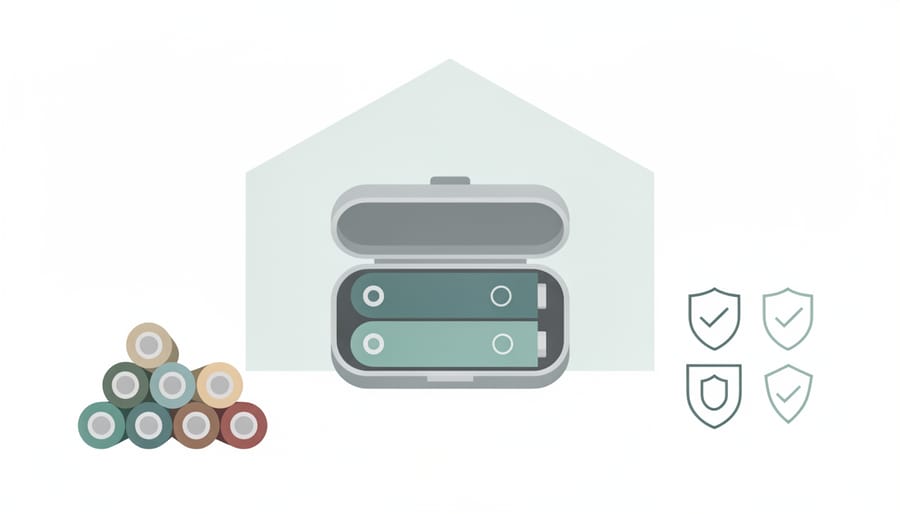
Start with proper handling. Never carry loose batteries in your pocket or bag where metal objects like keys or coins could contact the terminals and cause a short circuit. Always use a dedicated battery case. Inspect batteries regularly for any damage to the wrapper, even a small tear compromises safety and requires immediate rewrapping or replacement.
Charging practices matter enormously. Use only the charger designed for your device or a quality external charger from a reputable manufacturer. Avoid charging batteries overnight or leaving them unattended. Never charge a battery that feels hot or shows any signs of damage. Keep batteries away from extreme temperatures during charging and storage.
Storage requires attention too. Keep batteries in a cool, dry place away from direct sunlight. Partially charged batteries (around 40-60%) store better long-term than fully charged ones. Store batteries in their cases, never loose, and keep them away from flammable materials.
Watch for warning signs of battery problems. Batteries that become excessively hot during use, show bulging or swelling, leak fluid, or no longer hold a charge need immediate replacement. A battery that heats up quickly during normal use has likely degraded beyond safe operation.
Some vapers find the ritual of proper battery care contributes to their overall vaping experience, similar to how the relaxation effects of certain products enhance their routine. Proper maintenance becomes part of responsible vaping practice.
When batteries reach end-of-life, dispose of them properly through designated battery recycling programs available at many Canadian retailers and municipal facilities. Never throw lithium-ion batteries in regular trash.
Canadian vape retailers provide guidance on battery safety specific to products they sell. Don’t hesitate to ask questions, knowledgeable staff can clarify proper care for your specific battery type and device configuration.
Finding Quality Vape Batteries in Canada
Purchasing vape batteries in Canada requires careful attention to ensure you’re getting authentic, safe products. Start by buying only from established Canadian vape retailers with physical locations or verified online stores. These businesses have reputations to protect and typically source batteries directly from authorized distributors. Avoid marketplace sellers, auction sites, or deals that seem too good to be true, counterfeits are common and pose serious safety risks.
Look for recognized battery brands like Samsung, Sony, LG, and Molicel when shopping for removable batteries. Authentic batteries feature clear, professional printing, consistent wrapping without bubbles or tears, and proper documentation. Reputable retailers will display batch codes and can verify authenticity if you have concerns. Be wary of rewrapped batteries claiming exaggerated specifications, stick with manufacturer-branded cells from trusted sources.
When evaluating retailers, check for knowledgeable staff who can answer technical questions about amp ratings, capacity, and device compatibility. Quality shops provide proper storage (batteries should never be loose in bins), carry only age-appropriate models, and follow Canadian vaping regulations. They’ll also stock genuine battery cases, chargers, and safety accessories.
Price can indicate quality, batteries significantly cheaper than average often signal counterfeits or damaged stock. Expect to pay reasonable prices reflecting authentic product costs and proper import procedures. Many Canadian retailers offer battery testing services or will help you understand specifications for your specific device.
Just as consumers research topics like CBD tiredness to make informed wellness decisions, taking time to understand battery specifications and retailer credibility protects both your investment and safety. Ask questions, read reviews of Canadian vape shops, and prioritize authorized dealers who stand behind their products with return policies and customer support.
Choosing the right vape battery isn’t about finding a universal best option, it’s about matching the power source to your specific device and how you vape. Whether you prefer the simplicity of integrated batteries in pod systems or need the extended runtime of removable 18650s in a dual-battery mod, understanding these differences helps you make informed decisions that enhance your vaping experience.
The types of vape batteries we’ve explored, from built-in rechargeable cells to various removable formats like 18650, 20700, and 21700, each serve distinct purposes. Your choice should align with your vaping frequency, desired portability, and willingness to manage battery maintenance. A casual vaper who prioritizes convenience will have different needs than someone chasing high-wattage cloud production.
Above all, prioritize safety and quality. Purchase batteries only from reputable Canadian vape retailers who stock authentic products and can verify proper specifications for your device. Avoid the temptation to save money on questionable sources, counterfeit batteries pose genuine risks. Proper charging practices, storage, and recognizing signs of battery wear aren’t optional considerations; they’re essential habits that protect both you and your investment.
Canadian vape shops offer more than products, they provide personalized guidance based on your specific setup and usage patterns. Don’t hesitate to ask questions about battery compatibility, care routines, or safety concerns. Many retailers also share educational resources similar to our Canadian CBD guide that help you stay informed. Your vaping experience is only as reliable as the power source behind it, so invest the time to choose wisely.