If you’re wondering whether your vaping affects the people around you, you’re asking the right question. Unlike traditional cigarette smoke, vape devices produce aerosol, not smoke, and this distinction matters significantly for bystander exposure. While vaping isn’t entirely without trace, the health risks to others are dramatically lower than secondhand cigarette smoke.
Research shows that exhaled vapor dissipates quickly and contains far fewer harmful chemicals than cigarette smoke. However, “safer” doesn’t mean “harmless,” and understanding what bystanders actually breathe in helps you make informed decisions about where and when to vape.
The answer depends on several factors: the environment you’re in, ventilation, proximity to others, and the type of device you use. Whether you’re a considerate vaper trying to minimize impact on family members, or someone concerned about exposure in public spaces, the science reveals nuanced truths that go beyond simple yes-or-no answers.
This guide examines the evidence on secondhand vapor exposure, clarifies common misconceptions, and provides practical strategies for vaping responsibly around others in Canadian settings.
Understanding What Vape Vapor Actually Is
Vapor vs. Smoke: The Fundamental Difference
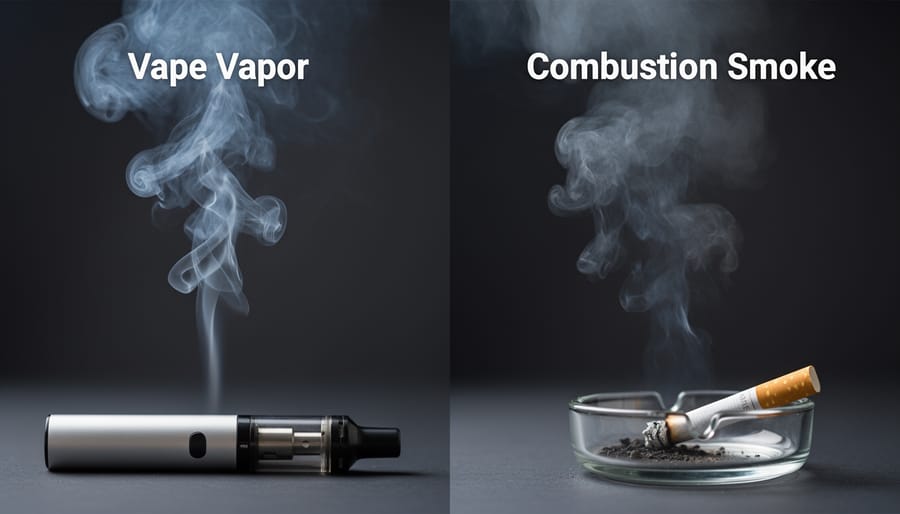
Understanding the difference between vapor and smoke is essential when considering secondhand exposure. Traditional cigarettes create smoke through combustion – burning tobacco at temperatures exceeding 600°C. This process generates thousands of chemical compounds, many of which are toxic and carcinogenic. By contrast, how vaping works involves heating e-liquid to around 200-250°C, which produces an aerosol commonly called vapor. This fundamental difference in temperature and process matters significantly.
Because there’s no combustion involved in vaping, the resulting vapor doesn’t contain the tar, carbon monoxide, and many harmful byproducts found in cigarette smoke. The aerosol consists primarily of propylene glycol, vegetable glycerin, nicotine (in most cases), and flavoring compounds. While this doesn’t mean vapor is completely harmless, the chemical composition is substantially different from smoke. This distinction affects what others are exposed to when you vape nearby. The visible cloud you see dissipates more quickly than smoke and contains fewer substances overall, though it’s important to understand what those substances are and whether they present any concerns for bystanders.
What’s in the Cloud You See
When you exhale vapor, you’re releasing a cloud that looks similar to smoke but has a very different composition. That visible mist is primarily made up of water droplets combined with propylene glycol and vegetable glycerin, along with trace amounts of nicotine and flavoring compounds. Unlike cigarette smoke, which contains thousands of chemicals produced through combustion, vapor particles are much simpler.
These aerosol droplets are larger and heavier than smoke particles, which means they don’t linger in the air as long. Most vapor quickly evaporates or settles onto nearby surfaces within seconds to minutes, rather than drifting through rooms or hanging in the air for extended periods. The concentration of any substances in exhaled vapor is significantly lower than what the vaper inhales, as much of it is absorbed during inhalation and held in the lungs momentarily before exhaling.
The Science Behind Secondhand Vapor Exposure
What Research Actually Shows
Scientific studies on secondhand vapor exposure paint a more nuanced picture than you might expect. According to research published in the Journal of Exposure Science and Environmental Epidemiology, secondhand e-cigarette aerosol does contain measurable amounts of nicotine, propylene glycol, and glycerin, but at substantially lower levels than secondhand tobacco smoke.
A 2018 study from the Roswell Park Cancer Institute found that indoor air quality returned to baseline levels within minutes after vaping stopped, whereas tobacco smoke particles linger for hours. The concentrations of particulate matter from vaping were comparable to using everyday household products like cooking spray or candles.
Research examining biomarkers in non-vapers exposed to secondhand vapor shows minimal nicotine absorption. Studies measuring cotinine levels, a metabolite that indicates nicotine exposure, found negligible amounts in people sharing enclosed spaces with vapers. This suggests that passive exposure doesn’t translate to significant nicotine intake for bystanders.
However, it’s important to note that research is ongoing. While current evidence suggests secondhand vapor is far less concerning than secondhand smoke, scientists acknowledge that long-term data is still limited. Studies have identified trace amounts of potentially harmful chemicals like formaldehyde and acetaldehyde in exhaled vapor, though at levels significantly below occupational safety thresholds.
The consensus among researchers is clear: secondhand vapor exposure presents a different risk profile than tobacco smoke exposure, with current evidence suggesting considerably lower health impacts for those nearby.
Comparing Secondhand Vapor to Secondhand Smoke
When examining the differences between secondhand exposure from traditional cigarettes and vapes, the contrast is quite significant. Secondhand tobacco smoke contains over 7,000 chemicals, including at least 70 known carcinogens like formaldehyde, benzene, and arsenic. These substances are produced through combustion—the burning of tobacco at high temperatures.
In contrast, secondhand vapor from e-cigarettes doesn’t involve combustion at all. The key distinction in vaping versus smoking is that vaping heats e-liquid to create an aerosol, not smoke. Research indicates that secondhand vapor contains far fewer chemicals and at much lower concentrations than secondhand smoke.
Studies conducted by Public Health England and other organizations have found that bystander exposure to vapor emissions is minimal. The particles in vapor tend to evaporate quickly rather than lingering in the air like smoke particles do. While secondhand vapor isn’t completely harmless—it can contain trace amounts of nicotine, propylene glycol, and flavoring compounds—the levels detected in the air are typically well below those considered harmful.
That said, it’s important to note that secondhand vapor isn’t the same as clean air. People with respiratory sensitivities, pregnant individuals, and children should still avoid unnecessary exposure. The evidence consistently shows that while secondhand vapor presents considerably lower risks than secondhand smoke, being considerate about where and when you vape remains important for respecting others’ comfort and health preferences.
Common Misconceptions About Vaping Around Others
Myth: Secondhand Vapor Is Just as Harmful as Secondhand Smoke
This is one of the most widespread misconceptions about vaping. While it’s true that secondhand exposure to vapor isn’t ideal, the science clearly shows it’s not equivalent to secondhand cigarette smoke.
Research consistently demonstrates that secondhand vapor contains significantly fewer harmful chemicals than cigarette smoke. A 2018 study published in the journal Nicotine & Tobacco Research found that bystander exposure to vapor aerosol resulted in negligible levels of toxicants compared to secondhand smoke exposure. Traditional cigarette smoke contains over 7,000 chemicals, including at least 70 known carcinogens. Vapor, by contrast, contains far fewer compounds at much lower concentrations.
That said, this doesn’t mean secondhand vapor is completely harmless. Studies have detected trace amounts of nicotine and other substances in the air after vaping. The key difference is the magnitude of exposure. While secondhand smoke has been definitively linked to serious health conditions including lung cancer and heart disease, current evidence hasn’t shown similar risks from secondhand vapor exposure.
It’s important to acknowledge that long-term studies are still ongoing. The vaping industry is relatively young, and researchers continue gathering data about extended exposure effects. Being considerate of others around you remains the responsible approach.
Myth: Vaping Creates Toxic Indoor Air Quality
You might have heard concerns that vaping indoors creates harmful air pollution similar to cigarette smoke. However, research paints a different picture when it comes to actual air quality measurements.
Studies examining indoor environments where vaping occurs have found that vapor dissipates quickly and doesn’t accumulate in the same way cigarette smoke does. Independent air quality testing has shown that while vaping does temporarily introduce particles and chemicals into the air, concentrations return to baseline levels much faster than with traditional smoking. Most measurements indicate that common indoor air quality standards remain within acceptable limits even during active vaping.
That said, this doesn’t mean vaping has zero impact on indoor air. Ventilation matters, especially in smaller spaces. A 2018 study published in the International Journal of Environmental Research and Public Health found that while vaping did increase certain airborne particles, levels were substantially lower than those from cigarette smoke and cleared relatively quickly with normal air circulation.
The key takeaway is that while vaping isn’t entirely without environmental impact, claims of toxic indoor air quality are generally overstated. Good ventilation and consideration for others remain important practices for responsible vapers.
What About Nicotine Exposure for Others?
When it comes to nicotine exposure from secondhand vapor, the levels are significantly lower than what you might expect. Studies measuring nicotine absorption in bystanders have found that the amounts are minimal, even in enclosed spaces.
Research shows that nicotine particles in exhaled vapor settle quickly and don’t linger in the air like cigarette smoke does. One study found that secondhand exposure to vapor resulted in nicotine absorption levels roughly equivalent to spending time in a room where cigarettes were smoked hours earlier, not during active smoking. The exposure is measurably different from secondhand smoke.
For context, the nicotine absorbed by someone standing near a vaper is typically less than 1% of what the vaper themselves inhales. While nicotine is present in secondhand vapor, the concentration decreases rapidly with distance and time.
That said, it’s worth being mindful around certain groups. Pregnant women, children, and individuals sensitive to nicotine may still prefer to avoid any exposure, even at these low levels. Being considerate about where and when you vape shows respect for those around you and helps maintain positive perceptions of the vaping community in Canada.
Who Might Be Affected and How
Special Considerations for Sensitive Groups
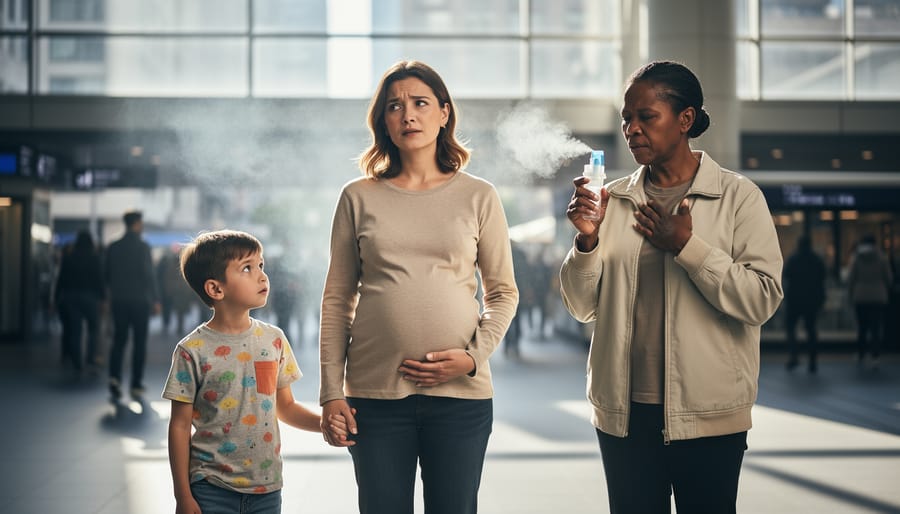
While second-hand vapor exposure is generally less concerning than cigarette smoke, certain groups deserve extra consideration and protection.
Children are particularly vulnerable to nicotine exposure, which can affect brain development. If you vape at home, maintain designated vaping areas away from children and never vape in enclosed spaces like cars when kids are present. Store all vaping products securely out of reach, as nicotine liquid can be harmful if ingested.
Pregnant individuals should avoid any exposure to nicotine, including second-hand vapor. Research on the effects of vapor exposure during pregnancy is still developing, but caution is warranted. If you live with someone who’s pregnant, it’s best to vape outdoors or in well-ventilated areas completely separate from shared spaces.
People with asthma, chronic obstructive pulmonary disease, or respiratory sensitivities may experience irritation from propylene glycol or vegetable glycerin in vapor. Even without nicotine present, these carriers can trigger symptoms in sensitive individuals. Watch for signs of discomfort like coughing or wheezing, and adjust your vaping habits accordingly.
The respectful approach is simple: when in doubt, ask. A quick conversation about someone’s comfort level shows consideration and helps you make informed choices about where and when to vape around others.
Allergies and Sensitivities to Vape Ingredients
While most people tolerate vape ingredients without issue, some individuals may experience allergic reactions or sensitivities when exposed to secondhand vapor. Understanding these potential reactions can help you make informed decisions about vaping around others.
Propylene glycol (PG), one of the main ingredients in e-liquids, is the most common culprit for sensitivities. Some people report experiencing throat irritation, headaches, or dry skin when exposed to PG-containing vapor. These reactions are typically mild but can be uncomfortable for sensitive individuals. Vegetable glycerin (VG), while generally considered hypoallergenic, can occasionally cause similar symptoms in rare cases.
Flavoring compounds present another consideration. With hundreds of different flavoring agents used across various e-liquids, it’s difficult to predict which might trigger reactions in specific individuals. Some people report respiratory irritation or allergic responses to certain sweet, fruity, or dessert-flavored vapors.
If someone around you mentions experiencing symptoms like eye irritation, breathing difficulties, or headaches when you vape, it’s important to take their concerns seriously. These reactions might indicate a genuine sensitivity rather than simply disliking the scent. Being considerate means adjusting your vaping habits or choosing alternative locations to ensure everyone’s comfort and wellbeing.
Best Practices for Considerate Vaping in Canada
Canadian Vaping Regulations and Public Spaces
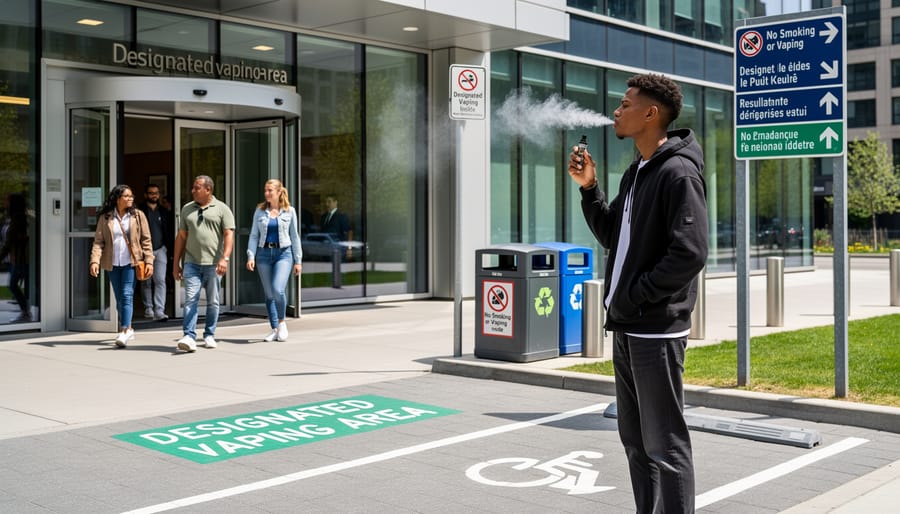
In Canada, vaping is treated similarly to smoking in many public spaces, though specific rules vary by province and municipality. Canadian vaping regulations generally prohibit vaping in enclosed public places, workplaces, and near building entrances. Many provinces also restrict vaping anywhere smoking is banned, including patios, parks, and around playgrounds or schools.
These regulations exist for several reasons. First, they protect non-vapers from unwanted exposure to aerosol, particularly those with respiratory sensitivities. Second, they help denormalize vaping behavior, especially around youth. Third, they address situations where people simply prefer not to be around vapor, regardless of health implications.
Provincial health authorities have implemented these restrictions as a precautionary measure while research continues. The approach recognizes that while vaping may be less harmful than smoking, it’s still considerate to keep vapor away from shared spaces. Before vaping anywhere public, check your local bylaws to ensure compliance and respect for others.
Courteous Vaping Etiquette
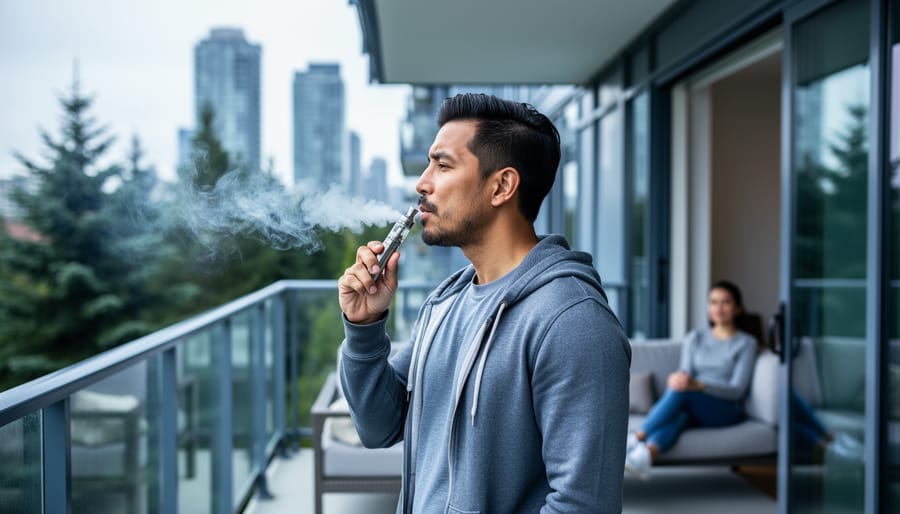
Even when vaping is permitted, being mindful of those around you demonstrates respect and helps maintain positive perceptions of the vaping community. Before vaping indoors in a private setting, always ask permission from others present, particularly if they have respiratory sensitivities or personal preferences about vapor exposure. In outdoor spaces, position yourself downwind from crowds and maintain a reasonable distance from entrances, windows, and outdoor dining areas.
Avoid vaping in enclosed public spaces like public transit, elevators, or small waiting rooms, even if not explicitly prohibited. When around children, pregnant individuals, or people with respiratory conditions, exercise extra caution and consider waiting until you’re in a more appropriate location. If someone expresses discomfort with your vaping, respond courteously and adjust your behavior accordingly.
In social situations, be aware of cloud size—taking smaller draws produces less visible vapor and reduces potential concerns from bystanders. These simple considerations help create a more harmonious environment while allowing you to enjoy vaping responsibly.
Understanding how vaping affects those around you helps everyone make better decisions. The key takeaway is that vape aerosol is fundamentally different from cigarette smoke. While research consistently shows that secondhand vapor exposure presents significantly lower health risks compared to secondhand smoke, this doesn’t mean vapor has zero impact on others.
Current evidence indicates that bystanders experience minimal exposure to harmful substances from secondhand vapor, especially when compared to the serious dangers of cigarette smoke. However, some people may still experience sensitivity to vapor components or find the presence of clouds uncomfortable.
The bottom line is simple: being considerate matters. Even though the risks are substantially reduced, respecting others’ preferences and following local regulations creates a more positive environment for everyone. Whether you’re vaping in Canada or elsewhere, awareness of your surroundings and choosing appropriate times and places to vape shows respect for non-vapers.
Making informed choices based on scientific evidence, rather than myths or assumptions, benefits the entire vaping community. By understanding the facts and practicing courtesy, you can enjoy vaping while maintaining consideration for those around you.